
The Ultimate Guide to the Best Monitored Home Security System
Why Choosing the Best Monitored Home Security System Matters in 2026
The best monitored home security system gives you 24/7 professional protection – trained agents watch for threats and contact emergency services on your behalf, even when you’re asleep or away.
Here’s a quick look at what matters most in 2026:
| Feature | Why It Matters |
|---|---|
| 24/7 monitoring | Ensures alerts are handled even if you miss a notification |
| Fast response time | Can reduce delays between an alarm and emergency dispatch |
| Cellular backup | Keeps the system connected if Wi-Fi fails |
| Battery backup | Maintains protection during power outages |
| Video verification | Can help confirm real threats for faster dispatch |
Most home break-ins happen fast. Burglars typically spend fewer than 60 seconds trying to get inside. If your alarm system is slow – or worse, only sends a notification to your phone – that window can close before anyone responds.
That’s the core problem with self-monitoring. You might miss a notification. You might be busy. You might be asleep.
Professional monitoring solves this. A real person gets the alert, checks the situation, and calls for help – without you having to do anything.
Industry research indicates that professional monitoring costs between $15 and $53 per month depending on the provider and plan. That’s a small price for always-on protection, especially when you consider that the average value of property stolen in a residential burglary is $5,944.
The challenge is picking the right system. Equipment quality, contract terms, response times, and smart home compatibility all vary a lot between providers. This guide breaks it all down so you can choose with confidence – without overspending.
For a broader overview of home protection basics, the National Fire Protection Association also offers useful safety guidance that complements smart home security planning.
Why Professional Monitoring is Essential for Modern Safety
In smart home technology, “self-monitoring” has become a popular buzzword. It sounds great on paper: buy a few cameras, get app alerts, and save on monthly fees. However, we’ve found that self-monitoring has a major flaw: human error. If you are in a theater, on a flight, or simply a heavy sleeper, you might miss the one notification that matters.
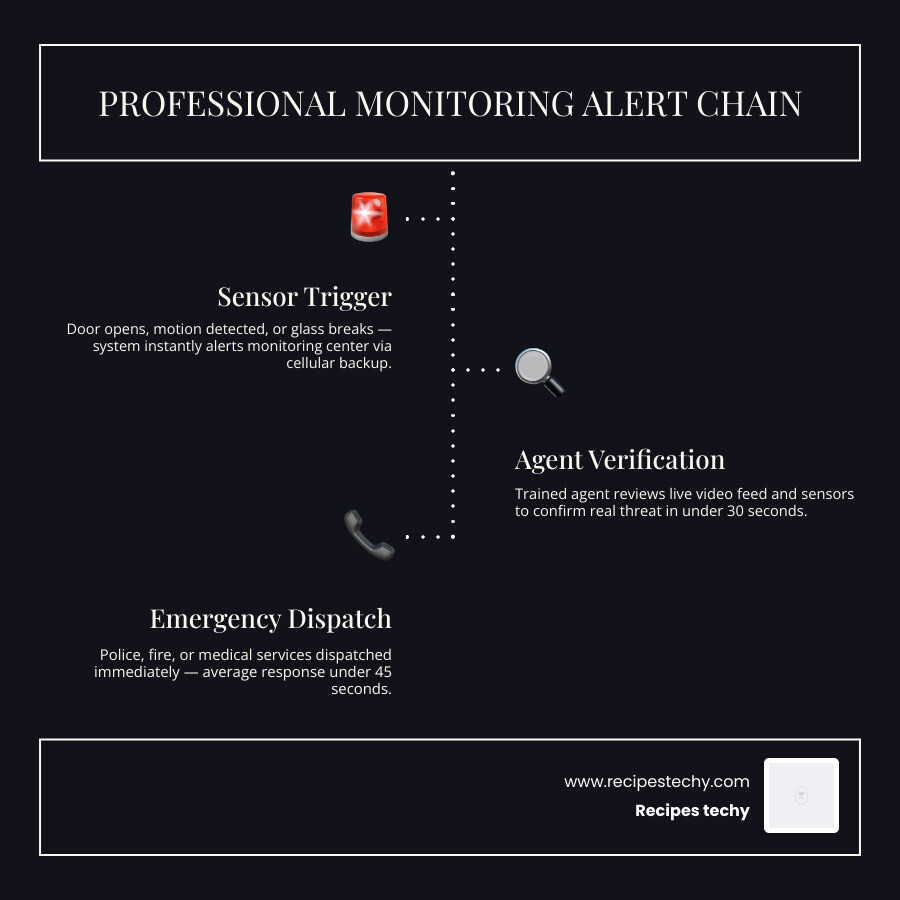
Professional monitoring is the gold standard for a reason. It ensures that a dedicated monitoring center is watching your home 24/7. When a sensor is triggered, an agent is alerted immediately. They can verify the threat via video and dispatch police, fire, or medical services in seconds.
The Power of Response Times
Response time is the heartbeat of the best monitored home security system. While the industry average sits around 45 seconds, many modern professionally monitored systems now aim to get well under that mark. In an emergency, even small time savings can make a meaningful difference.
Redundancy: Cellular and Battery Backup
What happens if a burglar cuts your phone line or the power goes out during a storm? A truly professional system doesn’t blink. Most modern systems use cellular backup, meaning they communicate via a dedicated mobile network rather than relying on your home Wi-Fi. Additionally, high-quality base stations include a 24-hour battery backup, ensuring your home remains a fortress even during a blackout.
Crime Prevention through Active Intervention
Monitoring in 2026 isn’t just about calling the police after a window breaks. It’s about prevention. Features like live talk-down, smart deterrence, and verified alerts can help stop intruders before a break-in escalates. Imagine a burglar hearing a live voice say, “I see you, and the police are on their way.” That is a powerful deterrent.

Essential Equipment and Features for Total Protection
To build the best monitored home security system, you need more than just a camera at the front door. A comprehensive system is a network of specialized sensors working in harmony. Here is the equipment we consider essential for any modern home:
- The Base Station: The “brain” of your system. It coordinates all sensors and communicates with the monitoring center.
- Entry Sensors: These go on your doors and windows. They alert the system the moment a seal is broken.
- Motion Detectors: Modern motion sensors are pet-immune, meaning they use heat signatures to distinguish between a 15-pound cat and a 180-pound human.
- Glassbreak Sensors: These listen for the specific frequency of shattering glass, providing coverage for rooms with multiple windows where entry sensors might be too numerous to install.
- Smart Deterrent Cameras: AI-powered cameras that can distinguish between a person, a pet, and a vehicle. Some even use light and sound, like a 105dB siren, to scare off lurkers before they touch your door.
- Environmental Sensors: A complete system protects against more than just people. Smoke, Carbon Monoxide (CO), and water leak sensors are vital for preventing catastrophic property damage.
For most households, the goal is a balanced setup that covers main entry points, common living areas, and major safety risks without overcomplicating installation.
Video Verification: The Priority Dispatch Secret
One of the most important features to look for is video verification. In many jurisdictions, police treat “unverified” alarms as low priority because false alarms are so common. However, when a monitoring agent can look at a camera feed and confirm a crime is in progress, it often triggers a “priority dispatch,” leading to much faster police arrival.
Comparing the Best Monitored Home Security System Providers in 2026
Choosing a provider often comes down to your lifestyle. Are you a renter who wants to take the system with you? Or a homeowner looking for a permanent, professionally installed solution?
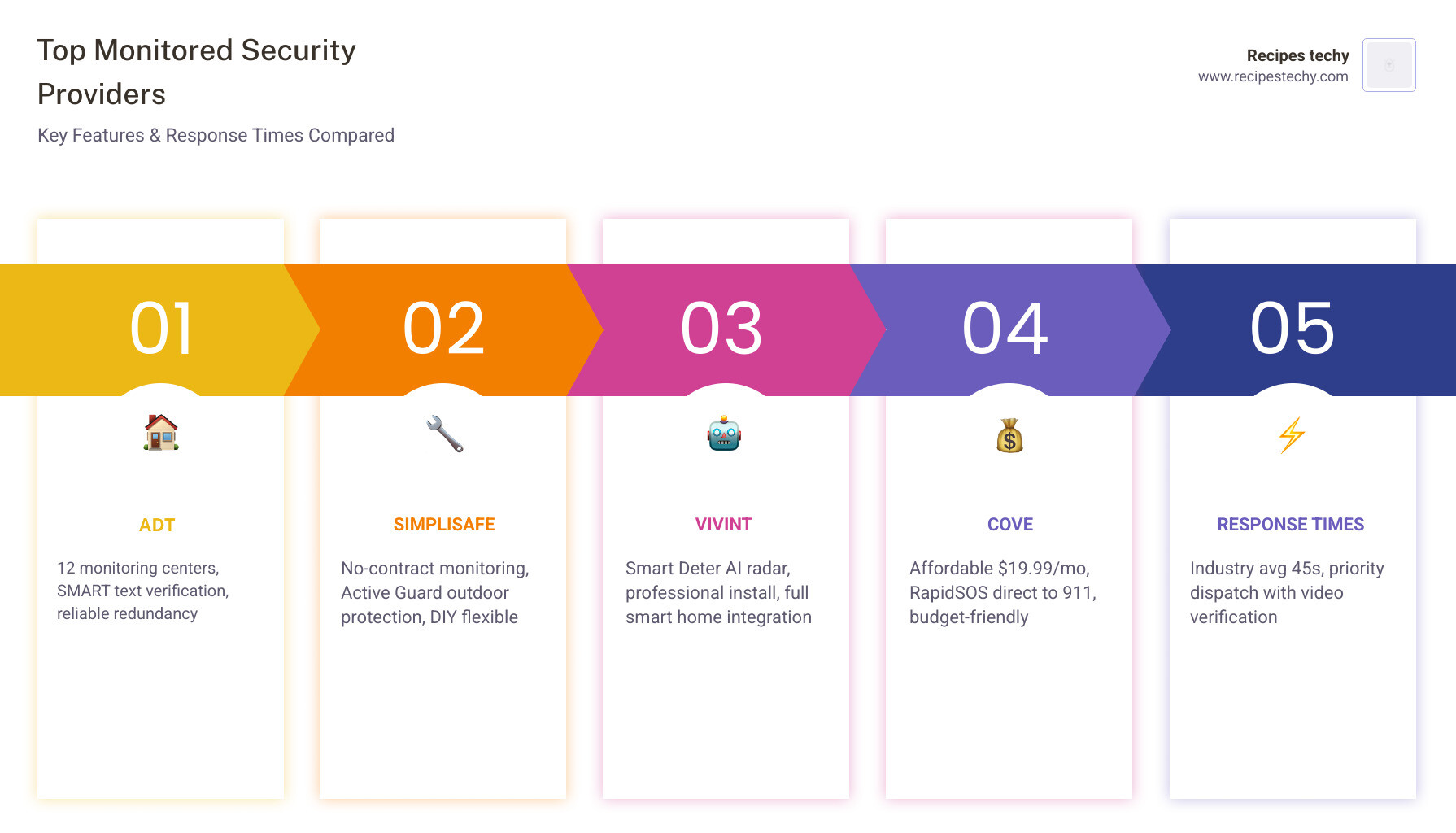
Instead of focusing on individual brands, it’s often more helpful to compare providers by service model and core features:
Professionally Installed Monitoring Services
These services are often best for homeowners who want expert placement of sensors, in-home setup assistance, and a more hands-off experience. They may include stronger smart home integration and more customized equipment packages.
DIY Monitored Systems
DIY monitored systems are a strong fit for renters, smaller homes, and budget-conscious households. They typically use wireless components, adhesive mounting, and app-based setup, making them easier to move and expand over time.
Smart Home-Focused Platforms
Some monitored systems place a bigger emphasis on automation, including routines for locks, lights, thermostats, and video doorbells. If smart home convenience matters as much as security, this category is worth extra attention.
Budget-Friendly Monitoring Options
Affordable monitored systems can still offer strong protection if they include core essentials like entry sensors, cellular backup, app alerts, and professional dispatch support. The best value usually comes from balancing upfront equipment costs with monthly monitoring fees.
When comparing any system, prioritize response speed, equipment reliability, contract flexibility, smart home compatibility, and whether monitoring is handled by 24/7 U.S.-based agents.
Evaluating Costs, Contracts, and Installation Options
When you’re hunting for the best monitored home security system, the “sticker price” of the equipment is only part of the story. You need to look at the Total Cost of Ownership (TCO).
Professional vs. DIY Installation
- Professional Installation: Some providers require a pro to come to your home. This typically costs between $99 and $199. The benefit? They ensure every sensor is perfectly placed and the “dead zones” are eliminated.
- DIY Installation: Many modern systems are designed for the average person to set up in under an hour. Most sensors use “peel-and-stick” adhesive, making them perfect for renters who can’t drill holes in the walls.
Monthly Fees and Contracts
This is where the biggest differences lie.
- Contracts: Traditional providers often require a 36 to 60-month contract. This usually allows you to get the equipment for a very low upfront cost (sometimes $0 down), but you are locked in for years.
- No-Contract: DIY providers usually require you to pay for the equipment upfront ($200 – $600), but they offer month-to-month monitoring. If you decide to move or no longer want the service, you just cancel—no fees.
Financing and Guarantees
Many companies now offer 0% APR financing on equipment for up to 60 months, making even the most expensive systems accessible on a budget. Also, look for “Anti-Theft Guarantees.” Some providers will pay your insurance deductible (up to $500) if your home is burglarized while the system is armed.

Frequently Asked Questions about Monitored Security
What is the best monitored home security system for small homes and apartments?
For apartments, we highly recommend DIY systems. Because the sensors are wireless and use adhesive strips, you won’t lose your security deposit for damaging the walls. These systems are also portable, so you can pack them up and take them to your next home. Look for no-contract plans so you aren’t stuck paying for a system if you move to a building that already has security.
How do I find the best monitored home security system with no long-term contract?
The key is to look for companies that sell their equipment a la carte. If you pay for the hardware upfront, you generally have the right to choose month-to-month monitoring. Be wary of free equipment offers, as these almost always come with a 3-year or 5-year monitoring contract hidden in the fine print.
What is the average response time for professional monitoring?
The industry average is around 45 seconds. However, in 2026, many of the best systems are faster, especially when they include modern monitoring centers, app-based verification, and video confirmation tools that help speed up emergency dispatch.
Conclusion
Securing your home shouldn’t be a luxury reserved for the few. Whether you choose a professionally installed system, a smart home-focused platform, or a flexible DIY setup, the best monitored home security system is the one that fits your specific lifestyle and budget.
At Recipes Techy, we believe in accessible smart living. By combining a professionally monitored system with smart home automations—like smart lights that turn on when an alarm is triggered—you create a layered defense that keeps your family safe and your energy bills low.
Ready to make your home smarter and safer? Check out More info about smart home services to find more budget-friendly tips on automation and energy efficiency. Peace of mind is just a few sensors away!
